Does It Work?
Ten Years of Data Say Yes. And the Results Last.

Most treatment programs will tell you they’re effective. Legacy shows you the proof.
Since 2013, Legacy has tracked client outcomes using validated, standardized clinical instruments — measuring mental health, relationships, and social functioning at admission, through treatment, and 6 to 12 months after clients leave. The data is collected continuously, analyzed independently, and published openly. The finding is consistent across every year, every gender, and every age group Legacy serves: clients get better. And they stay better.
A group of hikers with colorful backpacks stand on a grassy trail and point toward a large blue lake.
Juniper Canyon Women's program in action outdoors
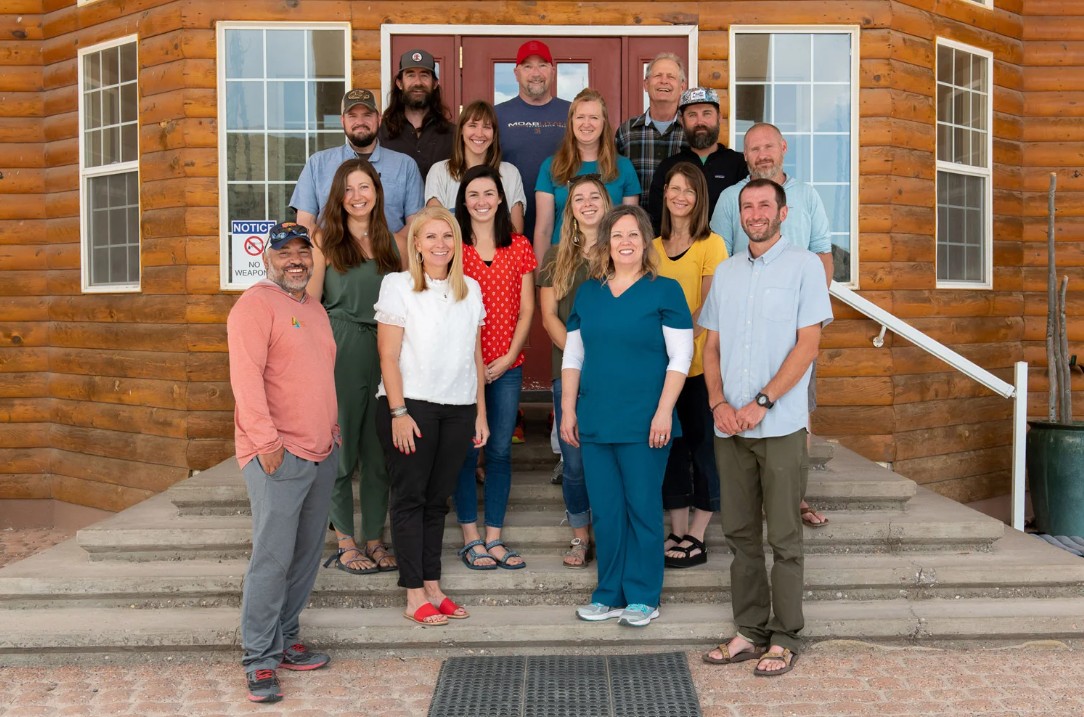
A professional team of men and women stand together on the steps of a large wooden residential lodge.
0
Adults Served Since 2013
0
Years Of Continuously Collected Outcome Data
0
Domains Of Clinically Significant Improvement
0
Post-Treatment Gains Sustained
0
Independently Prepared by OutcomeTools by BestNotes
A group of hikers with heavy packs walks along a narrow dirt trail through a lush green aspen forest.

Not Marketing. Not Anecdotes. Peer-Grade Clinical Research.

Legacy is recognized as a Research Designated Program by the National Association of Therapeutic Schools and Programs (NATSAP). That designation means Legacy doesn’t just claim to measure outcomes — it meets an external standard for how outcomes are collected, analyzed, and reported.
The 2024 Evaluation Report was prepared by OutcomeTools by BestNotes — an independent evaluation firm with no financial stake in Legacy’s results. Every finding in this report reflects independently prepared analysis of data Legacy has collected and submitted since 2013.
Three validated instruments are at the core of the data:

OQ-45 (Outcome Questionnaire-45):

The industry-standard 45-item self-report instrument measuring mental health distress, relationship distress, and social role distress. Widely used, standardized, normed, validated, and reliable. Clients complete this weekly — creating a week-by-week map of their progress, not just a before-and-
after snapshot.

FAD-GF (McMaster Family Assessment Device – General Family Functioning
Subscale):

Measures how connected and accepted a client feels within their family.
Administered at admission, 6 months post-treatment, and 1 year post-treatment.

URICA (University of Rhode Island Change Assessment):

Measures a client’s
readiness to change — providing context for interpreting outcome data and establishing
baseline engagement at admission.
“Legacy clients get better and stay better.”
Legacy Treatment Center 2024 Evaluation Report, OutcomeTools by BestNotes

Clients Improve Across Every Measured Domain. The Gains Hold After They Leave.

The OQ-45 measures three domains of health. A score above zero is
clinically problematic. A score below zero is in the healthy range. A change of one unit or more is clinically and statistically meaningful. Legacy clients — a matched group of 242 who completed surveys at admission, Week 12, and 6–12 months after treatment — moved from above the line to below it in every domain. And stayed there.
A group of women engage in a lighthearted conversation by a wooden post fence at a recovery center.

1. Mental Health: Large, Significant, Sustained Improvement

The magnitude of this change is large (effect size η²=.65 — one of the strongest effect sizes documented in residential behavioral health research). Mental health improvementat Legacy is not marginal. It is the kind of change that shows up in a person’s daily life.

At Admission

Average score of 1.2 — meaningfully above the clinical threshold.

At Week 12

Average score of -1.1 — solidly in the healthy range.

6–12 Months Post-Treatment

Gains sustained.

Equally important: the change doesn’t disappear after clients go home. Follow-up data at 6 to 12 months post-treatment confirms that gains hold — clients are not just better at graduation, they remain measurably healthier months later.

What the week-by-week data shows: Mental health improves dramatically in the first week of treatment — then continues improving steadily across weeks 2 through 9, before stabilizing in the healthy range in the final three weeks. This is not a honeymoon effect. It is a structured therapeutic arc.

2. Relationships: Consistent Improvement, Sustained After Treatment

Most clients who come to Legacy are experiencing relational disruption — loneliness, dysfunctional family dynamics, or fractured peer relationships. By the end of treatment, and continuing after, clients report meaningfully better relationship functioning. The improvement is consistent across gender: males and females reach the same healthy range post-treatment, with slightly different trajectories during the program.

At Admission

Average score above the clinical threshold.

At Week 12

Moved into the healthy range.

Post-Treatment

Gains sustained at 6–12 months (effect size η²=.52)

3. Social Role Functioning: Clients Return to Life Ready to Engage

Social role distress measures whether someone can function as an adult in the world — holding a job, managing responsibilities, meeting everyday expectations. Clients entering Legacy typically can’t. Clients leaving Legacy — and 6 to 12 months after — consistently can.

At Admission

Above the clinical threshold — difficulty meeting adult expectations at work and in daily life. 

Post-Treatment

In the healthy range, with the largest effect size of the three domains (η²=.66).

The Whole Family Gets Better. Not Just the Client.
Legacy explicitly tracks family functioning — because recovery doesn’t happen in isolation. Using the McMaster Family Assessment Device (FAD-GF), Legacy measures how clients experience connection and acceptance within their family, at admission, 6 months after treatment, and one year after treatment.
The pattern in the data is clear: clients typically enter the program in the dysfunctional range of family functioning. By 6 months post-treatment, family functioning has moved into the healthy range — and those gains are sustained through the one-year follow-up.
This is one of the most practically meaningful findings in the entire report. It means that what happens at Legacy doesn’t stay at Legacy. The relational repair that happens during treatment extends outward into the family system after clients leave.
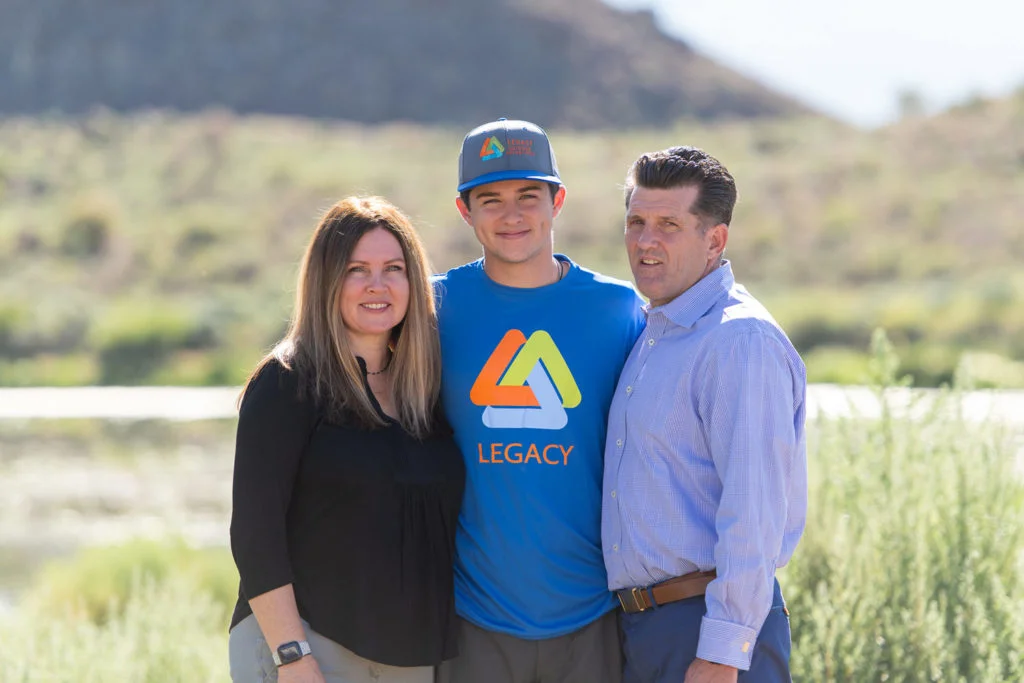
A group of three people standing together in a natural setting, emphasizing the family attachment pillar of the program.

Data Snapshot

Timepoint Family Functioning Status
Admission Dysfunctional range
6 Months Post-Treatment Healthy range
1 Year Post-Treatment Gains sustained
(Matched group: 174 clients who completed surveys at all three timepoints)
Legacy understands the vital role of family in a young person’s life and strives to foster improved family relationships. The validation shown in the numbers helps us understand that our work is having a beneficial impact.
Legacy Treatment Center 2024 Evaluation Report
A group of women sits in grass with a dog, facilitating trauma-informed care and peer support in a wooded setting.

We Don’t Just Measure Before and After. We Track Change Every Single Week.

Most programs offer a before-and-after picture. Legacy offers a 12-week map.
At Legacy, 282 clients completed OQ-45 surveys every week during treatment. The week-by-week trajectory data gives families and clinicians something most programs can’t provide: a realistic, research-based picture of what the therapeutic process actually looks like over time.

How Change Happens: Week-by-Week OQ-45 Progress Over 90 Days

Week 1–3:

Mental health improves dramatically. This is a rapid stabilization phase — clients move quickly out of acute distress as they enter a structured, supported environment.

Week 3–9:

Improvement continues, but at a slower, more consistent pace. This is the sustained clinical work — individual therapy, group process, outdoor experiential programming, and relational repair happening together.

Week 9–12:

Scores plateau in the healthy range — not because treatment stops working, but because clients are consolidating gains and preparing to integrate what they’ve learned into life after the program.

It Works for Everyone Legacy Serves. The Data Confirms It.

One of the most important questions a family or clinician should ask is: Does this work for someone like my person? Legacy can answer that question with specificity.

Gender

Legacy has served male clients since 2013 and expanded to serve female
clients beginning in 2018 at Juniper Canyon. The outcome data for male and female clients shows statistically equivalent improvement in mental health and social role functioning. Both groups arrive at the same healthy range post-treatment. The program
is demonstrably effective across gender.

Age

Legacy serves adults ages 18 to 40, with an average admission age of 24.
Outcome data shows that age does not predict how much a client benefits — the nearly flat regression line across the full age range confirms that an 18-year-old and a 38-year-old can expect equivalent improvement. Whether a client is in their early 20s or late 30s, Legacy’s outcomes are consistent.

Presenting Complexity

Most Legacy clients (89%) arrive with at least two primary clinical reasons for referral — addiction, depression, anxiety, and trauma are the most
common, alongside mood disorders, ADHD, eating disorders, personality disorders, and other complex presentations. These are not low-acuity clients. The outcomes datareflects results with a clinically complex population.
89% of clients present with 2+ primary clinical reasons for referral
Outcomes are statistically equivalent for male and female clients
Age (18–40) does not predict amount of improvement
Consistent effectiveness across every year from 2016–2022

Almost Half of Graduates Are Living Independently One Year Later.

Legacy follows up with former clients one year after treatment to understand where they are in their lives. The data is direct and concrete.
Nearly half of Legacy graduates are living independently one year out. This is not a program where clients cycle through and return. It is a program where adults leave with the capacity to function — and do.
Three women ride mountain bikes along a gravel path, demonstrating skill building and adventure-based recovery.

Living Situation One Year Post-Treatment:

Living Situation % of Clients
Living independently 47%
Living with parent(s) 19%
Living with roommate 11%
In another therapeutic program 11%
Other 11%
With relatives 1%
An iron ranch gate with text and a logo marks the entrance to a treatment facility on a dirt road.

Clients Arrive Ready. Legacy Meets Them There.

Outcome data only tells part of the story. Equally important is understanding whocomes to Legacy and what their baseline looks like.
At admission, Legacy assesses client readiness using the URICA (University of Rhode Island Change Assessment) — a standardized tool measuring whether someone is in pre-contemplation, contemplation, action, or maintenance stages of change.
Legacy clients enter the program with an average URICA score of 9.7 — placing most squarely in the contemplation phase: ready to begin making changes. Client self- report at admission confirms this, with an average score of 9.0 out of 10 on “I’m ready to make positive changes in my life.”
A man in a red shirt and blue cap leads a group of hikers through a blurred forest of aspen trees.
An individual in a blue t-shirt focuses on casting a fly fishing rod outdoors near a green forest.
This context matters for interpreting outcomes: Legacy’s clients are not being coerced. They are voluntary adults who arrive oriented toward change. Legacy’s clinical model capitalizes on that readiness — and the outcomes data reflects what happens when structured, evidence-informed treatment meets a willing adult client.

The Outcomes Don’t Happen by Chance. Here’s the Model Behind Them.

The clinical model at Legacy integrates three elements that, in combination,
produce outcomes measurably better than any single approach alone.
Element 1

Licensed Residential Care

24-hour clinical and medical oversight. Licensed therapists. On-site psychiatric consultation. Nursing-managed medication. The full infrastructure of evidence-based residential behavioral health treatment — not a camp, not a course, not a retreat.
Element 2

Adventure Therapy

Outdoor and experiential programming — hiking, rock climbing, mountain biking, equine work, fly fishing — administered as clinician-supervised therapeutic interventions, not recreation. Each activity is structured to produce clinical outcomes: regulation, self-efficacy, trust, relational repair, and earned challenge. This is why the week-by-week mental health data shows such rapid early improvement — the outdoor environment accelerates the therapeutic process in ways a clinical office alone cannot.
Element 3

Holistic and Family-Integrated Approaches

Legacy explicitly incorporates family in the treatment process — which is why family functioning data shows sustained improvement through one year post-treatment. Healing is not individual. It is relational. Legacy builds that into the model.
“Legacy’s integrated model of residential care, adventure therapy, and holistic approaches effectively supports adults aged 18 to 40 to improve their mental health, addiction, and behavioral challenges. These health improvements are sustained after treatment.”
Legacy Treatment Center 2024 Evaluation Report

What Clinicians Need to Know Before They Refer

When you refer an adult client to Legacy, you are referring to a NATSAP Research Designated Program that:
  • Has 10+ years of continuously collected, independently analyzed outcome data
  • Uses validated, peer-recognized instruments (OQ-45, FAD-GF, URICA)
  • Tracks outcomes not just at discharge, but at 6 and 12 months post-treatment
  • Has documented statistically significant improvement with large effect sizes across mental health, relationships, social role functioning, and family functioning
  • Produces equivalent outcomes across gender and age
  • Holds Joint Commission accreditation and Utah state residential behavioral health licensure

Two people sit in portable chairs in a natural setting, facilitating peer support and trauma-informed care.

The full 2024 Evaluation Report is available for clinical review. Contact us directly to discuss a client’s specific presentation, complexity, and fit.

View 2024 Evaluation Report

Questions About Effectiveness. Answered With Data.

Yes — documented by 10 years of independently verified outcome data. Clients show statistically and clinically significant improvement in mental health, relationship functioning, social role functioning, and family health. These improvements are sustained 6 to 12 months after treatment ends. The 2024 Evaluation Report was prepared by OutcomeTools byBestNotes, an independent evaluation firm.

Legacy uses three validated, standardized instruments: the OQ-45 (measuring mental health, relationship, and social role distress), the FAD-GF (measuring family functioning), and the URICA (measuring readiness for change). Clients complete the OQ-45 every week during treatment — producing a 12-week, week-by-week map of progress. Outcomes are tracked at admission, at Week 12, and at 6 and 12 months post-treatment.

The effect sizes are large by clinical research standards. On mental health distress, the effect size is η²=.65. On social role distress, η²=.66. On relationship distress, η²=.52. A change of 1 unit on the OQ-45 is clinically meaningful — Legacy clients move from an average of 1.2 above the clinical threshold at admission to 1.1 below it by Week 12. That is a full crossing of the clinical line.

Yes. This is one of Legacy’s most important findings. Follow-up data at 6 to 12 months post-treatment confirms that gains in mental health, relationships, social role functioning, and family functioning are sustained. Clients don’t just improve at Legacy — they remain measurably healthier after they leave.

Yes. Legacy began serving female clients in 2018 at Juniper Canyon. Outcome data for male and female clients shows statistically equivalent improvement in mental health and social role functioning. Both groups reach the healthy range post-treatment. The program demonstrates broad efficacy across gender.

Yes. Legacy serves adults ages 18–40, with an average admission age of 24. Statistical analysis shows that age does not predict the amount of benefit a client receives — outcomes are equivalent across the full age range. A 35-year-old can expect the same meaningful improvement as a 20-year-old.

Yes. Most Legacy clients (89%) arrive with at least two primary clinical reasons for referral. The most common are addiction, depression, anxiety, and trauma — but the client population also includes personality disorders, eating disorders, ADHD, autism spectrum presentations, and other complex co-occurring conditions. Legacy’s outcomes data reflects effectiveness with a clinically complex adult population, not a low-acuity one.

One year after treatment, 47% of Legacy graduates are living independently. The remainder are in a range of supported and community living situations. Nearly half functioning independently at one year is a concrete indicator that Legacy’s outcomes translate into real-world functioning.

The 2024 Evaluation Report was prepared by OutcomeTools by BestNotes, an independent evaluation firm. Legacy is also recognized as a Research Designated Program by NATSAP — an external designation that requires meeting established standards for how outcomes are collected, analyzed, and reported. The data is not self-reported.